History
The Manor House through time
Aspenäs Manor has a long and rich history that stretches back several hundred years. The site has undergone many changes, from legends of early settlement to a thriving estate and to today's modern hotel and conference business. Come with us back in history and let's take part in the most important events in Aspenäs' history.

The 14th century
According to legends
According to old stories and local legends, there may have been settlements at Aspenäs as early as the 15th century. There have also been rumors of a monastery having existed on the site, but no certain historical evidence of this exists.

The 19th century
The manor house was built
According to old stories and local legends, there may have been settlements at Aspenäs as early as the 15th century. There have also been rumors of a monastery having existed on the site, but no certain historical evidence of this exists.
For nearly two hundred years, Aspenäs has been owned and managed by the Lillie family. During this period, the estate developed as a manor house and became an important property in the area.
Anders Nilsson, who was later ennobled as Cederflycht, takes over the ownership of Aspenäs. He works as a merchant and sells, among other things, iron and aquavit. At the same time, he is also a privateer off the west coast, which at that time could be a very lucrative business.
Aspenäs säteri is purchased by Nils Lilliekreutz, who acts as a front man for the actual buyer, the merchant Nicolas Jacobson. During Jacobson's time, the estate undergoes significant changes. He has a new and magnificent main building built in wood, renovates the farm's outbuildings, and lays out extensive gardens. He also starts a brickyard in the vicinity and is simultaneously a successful merchant with a monopoly on sugar production in Gothenburg.
The 19th century
Manor house
1800
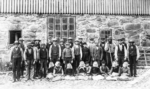
1800 - A man by the name of Bagge is granted permission by the Royal Majesty to buy Aspenäs along with several other estates. However, during his ownership, the maintenance of the farm begins to be neglected, especially as he gets older.
1808
Bagge's son takes over the estate, but after a while the ownership is split and Aspenäs is divided among several different owners.
1823
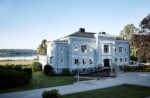
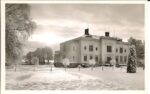
Johan von Holten purchases the remainder of Aspenäs and leaves his business to focus on renovating the dilapidated manor house. On the foundation from the 16th century, he builds the current manor house.
The beginning of the 20th century
Aspenäs golden age
1895
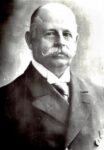
Wholesaler Arthur Seaton buys Aspenäs and initiates a new era of prosperity for the estate. He develops the property into a model farm with fine horses and high-quality cattle. At the same time, he lays out a large park and garden in English style and has the linden avenue planted, which still leads up to the manor house. During Seaton's time, Aspenäs becomes a venue for large and lavish events. Guests from high society, and sometimes even from the Swedish royal family, are invited to parties and gatherings. The guests are often transported from the train station in Jonsered across the lake to Aspenäs.
1900
The steam launch previously used to transport guests is replaced by a modern electric boat named Giralda, showing Arthur Seaton's interest in new technology.
1912
Arthur Edward Seaton passes away and the responsibility for the farm is taken over by his son George Seaton.
1927–1929
During this period, economic difficulties arise. George Seaton fails to run the business as successfully as his father, and large parts of Aspenäs are therefore divided and sold in smaller parts.

The 14th century
The manor is donated to Lerum Municipality
1966
The Aspenäs Gården Foundation is established with the goal of developing the activities on site.
1967
The hotel and conference operations start and the manor begins to be used as a meeting place for conferences and guests.
1994 – present
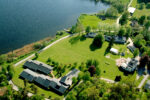
Aspenäs Manor present day
The facility is being expanded to accommodate more visitors. After the expansion, there will be capacity for approximately 180 guests as well as conference facilities for up to 240 people.
Today
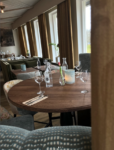
Aspenäs Manor is today a modern conference facility and a classic manor house hotel. At the same time, the historic environment lives on in the buildings and surroundings, and the linden avenue that Arthur Seaton once had planted still leads visitors up to the manor.
It is a luxury to be able to work in an environment as steeped in history as our manor house.
Nina Björk
Chief Operating Officer
The manor house today